
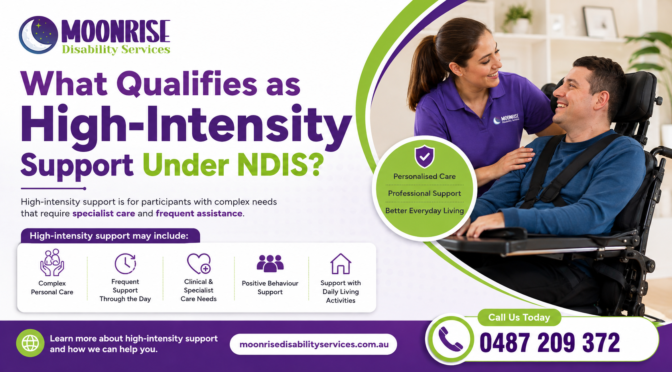
High-intensity support covers care needs that go beyond standard assistance — think complex health conditions, specialised equipment, or round-the-clock supervision. If you’re searching for high intensity disability support in Mooroolbark, this guide breaks down exactly what qualifies, who can deliver it, and how to get started.
What Does “High-Intensity Support” Actually Mean?
High-intensity support refers to complex disability care requiring specialised training, such as tracheostomy management, enteral feeding, ventilator support, or complex bowel care. It’s delivered only by skilled disability workers who hold formal clinical competency sign-offs.
Who Qualifies for High-Intensity Daily Personal Activities?
Participants qualify when their NDIS plan identifies complex medical or behavioural needs that standard support workers aren’t trained to manage. This is common for people needing NDIS high intensity daily personal activities in Boronia, particularly those with acquired brain injuries, spinal cord injuries, or progressive neurological conditions.
Common qualifying needs include:
- Complex bowel and catheter care
- Subcutaneous injections and medication management
- Tracheostomy and ventilator support
- Severe dysphagia (swallowing) management
- Epilepsy management requiring emergency response
- Complex wound care and pressure injury prevention
What Are the Official High-Intensity Support Categories?
The NDIS Quality and Safeguards Commission sets out specific “High-Intensity Support Skills Descriptors” that providers must formally train against.
|
Category |
Example Support |
|
Complex bowel care |
Enemas, manual evacuation |
|
Enteral feeding/swallowing |
PEG feeding, dysphagia support |
| Tracheostomy management |
Suctioning, tube care |
|
Ventilation |
Non-invasive/invasive ventilator support |
| Subcutaneous injections |
Insulin, other medications |
|
Urinary catheter care |
Catheter changes, hygiene |
| Complex wound management |
Dressing changes, infection monitoring |
How Is High-Intensity Support Different From Standard Personal Care?
Standard personal care covers showering, dressing, and meal prep. High-intensity support adds complex health supports delivered by workers with documented clinical competencies, not general disability support experience alone.
Why Choose a Registered Provider for High-Intensity Care?
Only a registered NDIS high intensity provider in Mooroolbark can legally deliver these supports, since the NDIS Commission mandates competency-based training, supervision, and regular clinical audits. Choosing an unregistered or under-qualified provider puts participant safety directly at risk.
Look for these credentials before signing up:
- Verified clinical competency certificates for each support worker
- Ongoing supervision by registered nurses
- Documented incident and medication management systems
- Experience with 24-hour disability care rostering
- Positive family and participant testimonials
What Does High-Intensity Daily Personal Activities Support Look Like Day-to-Day?
It typically combines intensive personal care — showering, transfers, feeding — with clinical tasks such as medication administration and seizure monitoring, all of which are documented and reported back to families and coordinators. Families searching for high intensity daily personal activities in Ferntree Gully often need this blended model, especially where participants live independently but require overnight clinical oversight.
How Do You Access High-Intensity Support Through Your NDIS Plan?
Your plan needs specific funding under Core Supports (Assistance with Daily Life) with a note confirming complex needs, usually backed by an occupational therapist or nursing assessment.
Steps to access support:
- Get an OT or nursing functional assessment
- Request high-intensity funding be reflected in your plan
- Choose a provider offering specialised disability support
- Confirm worker competency records before support starts
- Set up a review schedule with your support coordinator

Why Local, Experienced Support Matters
Families across the eastern suburbs consistently look for the best high intensity disability support in Mooroolbark because local providers understand regional hospital networks, GP relationships, and community services — making care coordination far smoother. High intensity personal care services in Mooroolbark delivered by local teams also mean faster response times and more consistent staffing continuity, which matters enormously for participants with complex needs.
Ready for Skilled, Reliable High-Intensity Support?
If you or a loved one needs experienced high care support workers in Mooroolbark, don’t leave complex care to chance. High intensity disability support in Mooroolbark should come from Moonrise Disability Services that people trust for clinical accuracy, compassion, and consistency. Get in touch today for a free, no-obligation care assessment and discover how our registered, skilled team can support your family with confidence.
FAQs
- Who can legally provide high-intensity NDIS support?
Only NDIS-registered providers with staff holding documented High-Intensity Support Skills Descriptor competencies.
- Does high-intensity support cost more than standard personal care?
Yes, it’s funded at a higher rate under Core Supports due to the clinical training and supervision required.
- Can I switch from standard to high-intensity support mid-plan?
Yes, with an updated OT or nursing assessment, your support coordinator can request a plan variation.
- Is overnight high-intensity care available?
Yes, many providers offer 24-hour disability care, including active or sleepover overnight shifts.
- How often should high-intensity support plans be reviewed?
Ideally every 3–6 months, or sooner if health needs change significantly.


