
You’re approved for Supported Independent Living (SIL).
You’ve moved into a new environment.
You’ve got funding.
So why does everything still feel so complicated?
Many participants discover that SIL doesn’t automatically solve every challenge. Managing supports, coordinating providers, building routines, handling service changes, and working towards greater independence can quickly become overwhelming.
That’s where support coordination changes everything.
If you’ve been wondering whether NDIS support coordination in Ringwood can help you get more from your SIL funding, the answer might be simpler than you think.
What Does Support Coordination Actually Do in SIL?
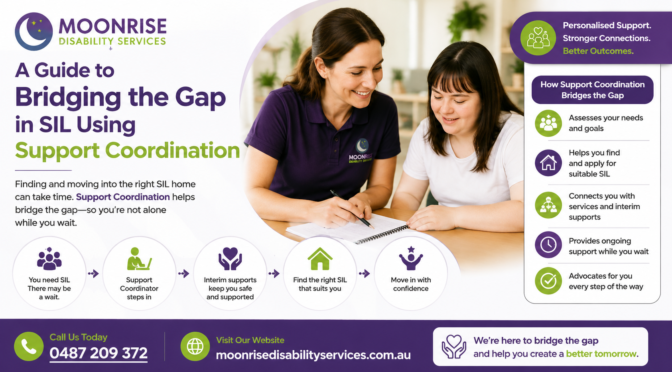
Think of a support coordinator as your guide, problem-solver, and connection point.
Their role isn’t to take control of your life. Their role is to help you take control of it.
A support coordinator can help you:
- Understand your SIL funding
- Connect with the right service providers
- Build a stronger support network
- Navigate plan changes
- Improve communication between providers
- Develop skills that encourage greater independence
- Resolve service delivery issues
The goal isn’t just support. The goal is progress.
The Biggest SIL Challenges Participants Face
Many participants experience the same roadblocks, including:
- Limited provider communication
- Difficulty understanding funding
- Unclear support responsibilities
- Inconsistent daily routines
- Trouble finding suitable community programs
- Lack of capacity-building opportunities
- Difficulty preparing for plan reviews
These gaps can make participants feel frustrated, isolated, and unsure about their next steps.
Working with a support coordinator in Mooroolbark can help eliminate these barriers before they become long-term problems.
How Support Coordination Helps You Get More From Your SIL Funding
Support coordination creates a bridge between funding and real-life outcomes.
Instead of simply receiving support, participants learn how to maximise every available opportunity. This can include:
Building Stronger Daily Living Skills
Support coordination can help participants strengthen skills related to:
- Household routines
- Meal preparation
- Personal care
- Budgeting
- Time management
Improving Service Navigation
Understanding your plan shouldn’t feel like decoding a complicated document.
Support coordinators can help you:
- Understand your supports
- Explore new services
- Identify funding opportunities
- Prepare for plan reviews
Creating Better Community Connections
True independence extends beyond the home.
Support coordination can help participants:
- Join community activities
- Develop social connections
- Explore education opportunities
- Participate in skill-building programs
- Strengthen community engagement
Participants accessing NDIS support coordination in Ringwood often discover that the right guidance creates more confidence, more choices, and better long-term outcomes.
Is Support Coordination Right for You?
Ask yourself these questions:
- Are you struggling to understand your SIL funding?
- Do you feel disconnected from your support network?
- Are your current services not meeting your goals?
- Do you want more independence but aren’t sure where to start?
If you answered “yes” to even one of these, support coordination could be the missing piece.
Working with an experienced support coordinator in Mooroolbark can help transform SIL from simply receiving support into actively building the life you want.
Ready to Make the Most of Your SIL Journey?
At Moonrise Disability Services, we believe SIL should empower you, not overwhelm you.
Our team works alongside participants to simplify services, strengthen support networks, and create pathways towards greater independence.
So, don’t let funding sit unused or opportunities slip away. Contact us today and discover how the right support coordination can help you get more from every step of your SIL journey.
Frequently Asked Questions
Can support coordination still benefit participants who have been in SIL for several years?
Yes. Even long-term SIL participants can benefit from fresh strategies, stronger community connections, and a review of existing support arrangements.
Can changing providers improve outcomes within Supported Independent Living?
Absolutely. Accessing NDIS support coordination in Ringwood can help participants evaluate current providers, identify service gaps, and connect with supports that better align with their goals.
Is support coordination only useful during an NDIS plan review?
Not at all. Support coordination can provide ongoing guidance, helping participants navigate everyday challenges between plan reviews.
Can support coordination help if communication between multiple providers becomes difficult?
Yes. A support coordinator in Mooroolbark can act as a central point of communication, helping different providers work together more effectively.
Can support coordination assist participants who want to transition towards greater independence?
Yes. Support coordinators can help participants develop practical life skills, explore new opportunities, and create achievable independence goals.
Is support coordination helpful when SIL goals no longer match a participant’s current needs?
Definitely. Through NDIS support coordination in Ringwood, participants can reassess their goals, explore alternative supports, and make informed decisions about their next steps.
Can support coordination help participants build stronger community relationships?
Yes. Support coordinators can identify local activities, programs, and social opportunities that encourage meaningful participation within the community.
What if I feel overwhelmed by the administrative side of SIL?
Working with a trusted, professional support coordinator can simplify service agreements, funding discussions, and provider coordination, allowing participants to focus more on achieving their personal goals.


