
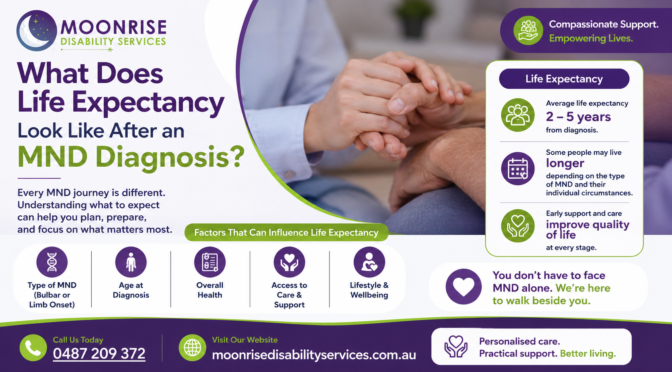
A Motor Neuron Disease (MND) diagnosis raises one urgent question for every family: how much time is left, and how do we make it count? While there’s no single answer, understanding MND life expectancy and accessing proper motor neuron disease support in Boronia services early can genuinely improve quality of life and daily comfort.
What Is the Average Life Expectancy After an MND Diagnosis?
Most people live over 5 years after diagnosis, though roughly 10% live beyond 10 years. Survival depends heavily on the MND subtype, age at onset, and how quickly motor neuron disease progression affects breathing and swallowing muscles — which is why timely local support, such as an MND care specialist in Croydon, matters from day one.
What Factors Influence MND Prognosis?
Several variables shape MND prognosis on a case-by-case basis:
- Age at diagnosis — younger onset often means slower progression
- Type of MND — limb-onset generally progresses slower than bulbar-onset
- Respiratory function — early breathing decline shortens survival
- Nutritional status — maintaining weight supports resilience
- Access to multidisciplinary care — including MND care services in Ferntree Gully, which coordinates neurologists, physiotherapists, and speech pathologists under one plan
Do the Different MND Types Affect Life Expectancy Differently?
Yes — bulbar-onset MND typically progresses faster than limb-onset MND, directly impacting expected survival timeframes.
| MND Type | Typical Onset Area | General Progression Speed |
| Limb-onset ALS | Arms/legs | Slower |
| Bulbar-onset ALS | Speech/swallowing | Faster |
| Progressive Muscular Atrophy | Lower motor neurons | Variable, often slower |
| Primary Lateral Sclerosis | Upper motor neurons | Slowest, longest survival |
Can Early Intervention Extend Life Expectancy?
Yes. Early symptom management, respiratory support, and NDIS Support for Motor Neuron Disease Lilydale participants have been shown to improve both survival and comfort.
Early intervention typically includes:
- Regular respiratory function monitoring
- Speech pathology for swallowing safety
- Occupational therapy for home modifications
- Dietitian input to prevent unintended weight loss
- Emotional and psychological counselling for the whole family
How Does NDIS Funding Support MND Patients?
The NDIS funds equipment, home care, and therapy that directly ease daily challenges of living with MND. Families accessing NDIS support for motor neuron disease in Lilydale can receive funding for mobility aids, communication devices, home modifications, and personal care support — often within weeks of plan approval.
When Should You See an MND Care Specialist?
As soon as symptoms are suspected — early referral to an MND care specialist in Croydon allows a tailored care plan before mobility or speech significantly declines. Specialists also help families understand palliative and end-of-life care planning without unnecessary delay or distress.
What Does Quality of Life Look Like at Each Stage?
Quality of life at each stage depends on how early families connect with local, coordinated care rather than managing symptoms alone.
- Early stage: Mild weakness, independence largely maintained, focus on planning ahead
- Middle stage: Increased mobility aids, assistance with daily tasks, communication support — this is often when families formalise a routine with local MND care services in Ferntree Gully
- Late stage: Full-time care, respiratory support, focus on comfort and dignity
Get Local MND Support Today
Every week without proper support is a week of unnecessary strain on you and your loved ones. Our team at Moonrise Disability Services helps families across the eastern suburbs build a personalised, stage-appropriate care plan from diagnosis through to full-time support. Contact us today for a free, no-obligation consultation and take the first step toward better care, comfort, and peace of mind.
Frequently Asked Questions
1. Is MND always fatal?
Yes, MND is currently a terminal condition, though the rate of progression varies significantly between individuals.
2. Can MND go into remission?
No, MND does not go into remission, though symptom management can slow functional decline.
3. What is the youngest age MND can be diagnosed?
MND can occur at any adult age, though it’s most commonly diagnosed between 50 and 70 years old.
4. Does the NDIS cover full-time in-home MND care?
Yes, eligible participants can receive NDIS funding for full-time or high-intensity in-home support as needs progress.
5. How quickly should care support start after diagnosis?
Care support should begin immediately after diagnosis to maximise comfort, independence, and long-term outcomes.


